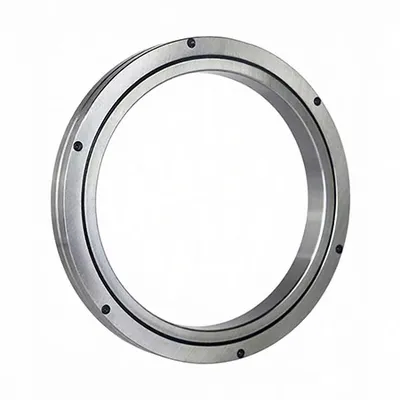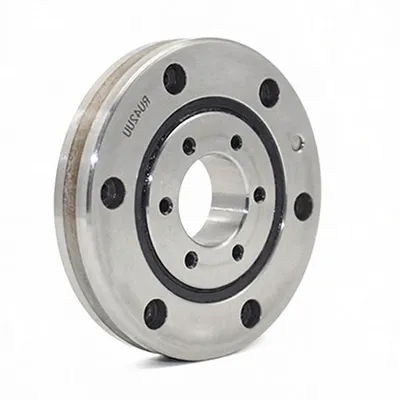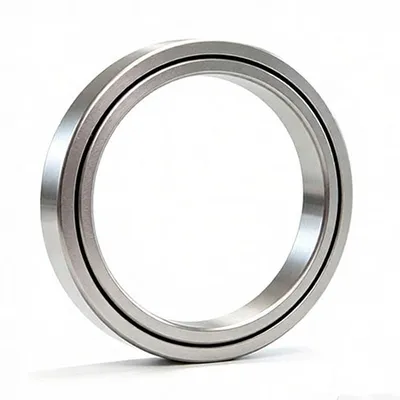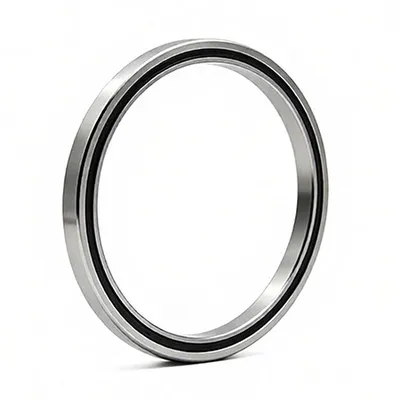
Choosing the right crossed roller bearing is not simply a matter of matching the bore, outside diameter, and width shown in a catalog. Engineers need to consider the actual load profile, rotational accuracy, rigidity, preload, operating speed, installation conditions, and service environment before they can identify a bearing that will perform reliably in the finished machine.
Crossed roller bearings are widely used in precision rotary mechanisms because their crossed cylindrical rollers provide line contact and can support radial, axial, and moment loads within a compact structure. Manufacturers commonly position these bearings for applications such as robotic joints, rotary tables, inspection equipment, indexing mechanisms, semiconductor equipment, and precision automation systems.
This guide explains how to select crossed roller bearings from an engineering and purchasing perspective. It focuses on the parameters that actually influence bearing performance and provides a practical framework for communicating requirements with a bearing manufacturer.
What Is a Crossed Roller Bearing?
A crossed roller bearing uses cylindrical rollers arranged alternately at approximately 90 degrees to each other between inner and outer raceways. One set of rollers primarily responds to loads in one direction, while the other set responds to loads in the perpendicular direction. This arrangement allows the bearing to accommodate combined loads while maintaining a relatively compact radial and axial envelope.
The line contact between the rollers and raceways also contributes to high rigidity and precise rotational movement. However, these characteristics do not mean that every crossed roller bearing automatically provides the same accuracy or stiffness. The final performance depends on bearing size, preload or clearance, manufacturing accuracy, mounting conditions, lubrication, and the stiffness of the surrounding structure.
For this reason, the selection process should begin with the application rather than with a preferred bearing model.
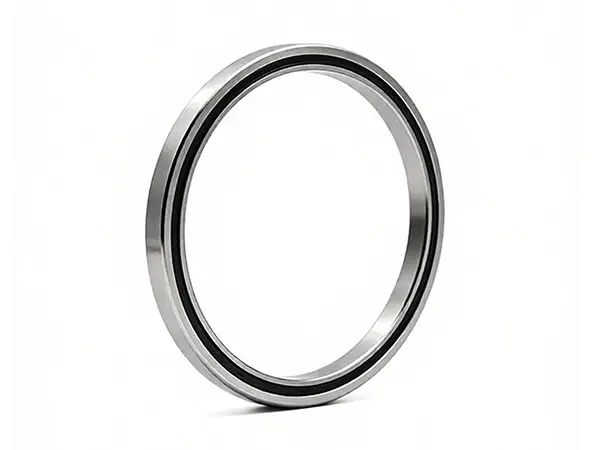
Define the Application Before Choosing the Bearing
The first step in crossed roller bearing selection is to understand how the bearing will work inside the machine.
An engineer should identify the rotating component, the fixed component, the expected motion profile, the operating cycle, and the forces acting on the bearing. The application may involve continuous rotation, intermittent indexing, oscillating motion, or occasional positioning movements, and each condition can affect the final selection.
You should collect the following information before requesting a quotation:
Bearing mounting position and rotation direction
Radial load
Axial load
Tilting or moment load
Rotational speed
Acceleration and deceleration
Required service life
Required rotational accuracy
Required rigidity
Starting or friction torque requirements
Operating temperature
Dust, moisture, vacuum, or clean-room conditions
Lubrication requirements
Available installation space
A supplier can make a much more reliable recommendation when these conditions are available instead of receiving only a request such as “Please quote a crossed roller bearing with a 100 mm bore.”
Calculate the Radial, Axial, and Moment Loads
Load capacity is one of the most important factors when selecting a crossed roller bearing.
Many precision rotary applications do not expose the bearing to a single radial load. A robotic joint, rotary table, or inspection platform may simultaneously generate radial force, axial force, and an overturning moment.
The dynamic equivalent load therefore needs to reflect the combined loading condition. Manufacturer catalogs may provide specific calculation methods for combining radial load, axial load, and moment. For example, HIWIN provides a dynamic equivalent load calculation that incorporates radial load, axial load, moment, and the bearing's pitch-related geometry.
The selection should also distinguish between dynamic load capacity and static load capacity.
Dynamic load capacity becomes important when the bearing performs repeated rotational motion and the engineer needs to estimate fatigue life. Static capacity becomes especially important when the bearing experiences high loads at low speed, intermittent movement, or stationary loading. Schaeffler's engineering documentation specifically identifies static and dynamic load capacity, service life, and operational reliability as key factors in crossed roller bearing sizing.
You should therefore avoid selecting a bearing simply because its catalog load rating appears higher than the nominal machine load. The calculation should consider the actual load combination, operating cycle, application factor, and required safety margin.
Check the Moment Load Carefully
Moment load deserves special attention because it is easy to underestimate in compact rotary mechanisms.
Suppose a robotic arm applies a force at a distance from the bearing center. Even when the force itself appears relatively small, the distance between the force and the bearing center can create a significant overturning moment.
The same principle applies to rotary inspection tables, indexing platforms, optical equipment, and other mechanisms where the working load is offset from the bearing center.
A correct selection should therefore consider:
Radial force + axial force + moment + load position + mounting structure.
If the application involves a large eccentric load, provide the manufacturer with a drawing showing the load position and distance from the bearing center. A simple machine sketch can often provide more useful information than a long written description.
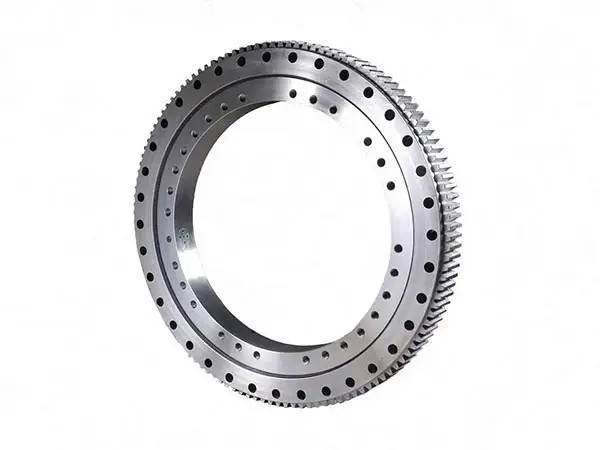
Select the Bearing Size According to the Real Installation Space
Once the load conditions are understood, the engineer can begin narrowing down the bearing dimensions.
The bore, outside diameter, width, and mounting dimensions must fit the machine design. However, dimensional compatibility should not be treated as the only selection criterion.
A bearing that physically fits into the housing may still be unsuitable if its load capacity, rigidity, accuracy, or preload does not meet the application requirements.
You should verify:
Bore Diameter
The bore must match the shaft or rotating interface while considering the required fit and dimensional tolerances.
Outside Diameter
The outside diameter determines whether the bearing can fit within the housing or mounting platform.
Bearing Width
The bearing width affects the available axial space and may influence rigidity and load distribution.
Mounting Holes and Ring Configuration
Some crossed roller bearings use different inner-ring or outer-ring mounting arrangements. The selected structure should correspond to which ring rotates, how the bearing is fixed, and how the surrounding components are assembled. HIWIN's selection system, for example, separates bearing selection by rotation arrangement and mounting design.
If the bearing replaces an existing component, providing the original part number, dimensional drawing, or physical sample can significantly reduce selection errors.
Choose the Required Accuracy Class
Precision requirements should be defined before selecting the bearing rather than after the bearing has been ordered.
Crossed roller bearings are commonly used in applications where rotational runout, positioning accuracy, repeatability, and smooth movement matter. However, higher nominal accuracy generally requires closer control of manufacturing tolerances and mounting conditions.
Manufacturers may offer different accuracy classes, such as P2, P4, and P5, depending on the product series and specification system. The exact tolerance values should always be confirmed against the relevant manufacturer's catalog rather than assumed from the class name alone.
The engineer should determine what the machine actually requires:
Radial runout
Axial runout
Positioning accuracy
Repeatability
Rotation smoothness
Starting torque
Friction torque
If the application has a defined inspection standard, the buyer should communicate the required measurement method and acceptance tolerance during the RFQ stage.
Understand Preload and Internal Clearance
Preload is another critical factor in crossed roller bearing selection.
A bearing with controlled preload can reduce internal play and improve rigidity, which can be valuable for precision positioning and rotary motion. However, increasing preload can also increase frictional resistance and starting torque. HIWIN's technical information distinguishes between clearance and preload conditions and notes that negative internal clearance can increase rotational resistance under unloaded conditions.
The engineer therefore needs to balance:
Rigidity ↔ friction ↔ starting torque ↔ heat generation ↔ motion requirements.
An application that requires extremely rigid positioning may need a different preload condition from an application that prioritizes low starting torque and smooth rotation.
You should not select preload simply because “higher preload means better performance.” The correct preload depends on the machine's actual operating requirements.
Consider Rotational Speed and Motion Profile
Crossed roller bearings are often selected for precision and rigidity rather than for maximum rotational speed.
Before choosing a model, confirm the actual operating speed and whether the machine uses continuous rotation, intermittent rotation, oscillation, or frequent acceleration and deceleration.
A bearing that works well at moderate continuous speed may behave differently under rapid indexing or repeated acceleration. Lubrication, preload, load, temperature, and duty cycle can also influence the allowable operating conditions.
The selection process should therefore use the manufacturer's published speed recommendations for the specific bearing rather than applying a generic speed value to every crossed roller bearing.
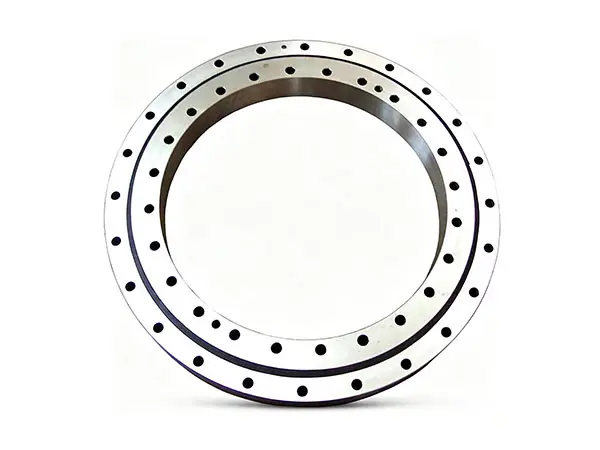
Evaluate the Operating Environment
The operating environment can significantly affect bearing life.
A clean inspection machine may require different sealing and lubrication considerations from a machine operating near metal chips, dust, coolant, moisture, or corrosive substances.
Before finalizing the specification, identify whether the bearing will operate in:
Normal industrial environments
Dusty production areas
High-humidity environments
Vacuum equipment
Clean rooms
Temperature-controlled equipment
Areas exposed to chemicals or corrosive media
Some manufacturers provide options for seals, special coatings, or specific lubricants depending on the application. HIWIN's selection interface, for example, includes environmental conditions such as vacuum and clean-room applications as well as sealing and grease requirements.
Do Not Ignore the Housing and Mounting Accuracy
One of the most common mistakes is to treat the bearing as an isolated component.
A precision bearing can only deliver its intended performance when the shaft, housing, mounting surfaces, shoulders, and fasteners provide an appropriate installation environment.
Parker's precision bearing documentation emphasizes the importance of mounting-surface accuracy for achieving high positioning and repeatability performance.
Before installation, the engineering team should therefore verify:
Shaft and housing dimensions
Mounting surface flatness
Parallelism
Perpendicularity
Shoulder accuracy
Surface finish
Fastening method
Assembly sequence
If the surrounding structure is too flexible or the mounting surfaces are inaccurate, simply choosing a higher-precision bearing may not solve the machine's accuracy problem.
Select the Right Lubrication Method
Lubrication reduces friction and helps protect the rolling contact surfaces from premature wear.
The correct lubricant depends on rotational speed, load, temperature, environment, sealing arrangement, maintenance interval, and machine design.
For applications that require long maintenance intervals, the engineer should consider whether the selected grease is compatible with the operating temperature and duty cycle. Clean-room and vacuum applications may require specialized lubrication rather than standard industrial grease.
You should also define the lubrication method during the specification stage. The bearing supplier should be informed if the machine has a centralized lubrication system or if the bearing must operate with a specific lubricant.
Decide Between Standard and Customized Crossed Roller Bearings
A standard crossed roller bearing is usually the most efficient option when the dimensions, mounting structure, preload, accuracy, material, lubrication, and environmental requirements match an existing product.
However, some machines have restricted installation space or unusual mounting requirements. A customized solution may be more appropriate when the application requires special mounting holes, non-standard dimensions, specific ring structures, special materials, sealing arrangements, or customized inspection requirements.
You should not assume that a familiar series designation automatically guarantees compatibility. Different manufacturers can use different naming systems and specifications, so the actual dimensional drawing and technical data should always be checked.
Compare Bearing Performance With Total System Requirements
Price should not be the first selection criterion for a precision bearing.
A lower-priced bearing may appear attractive during procurement, but an incorrect preload, unsuitable accuracy class, insufficient rigidity, or poor environmental compatibility can create additional costs through vibration, positioning errors, premature replacement, or machine downtime.
A better approach is to compare suppliers using several factors:
Dimensions: Bore, OD, width and mounting dimensions
Load: Radial, axial and moment loads
Life: Required service life and dynamic load rating
Accuracy: Runout and applicable accuracy class
Rigidity: Required stiffness and preload
Clearance: Required internal clearance or preload
Speed: Operating speed and duty cycle
Environment Dust, moisture, vacuum, temperature and chemicals
Lubrication: Grease type and lubrication method
Quality: Inspection reports and traceability
Customization: Special dimensions, holes, seals or materials
This approach helps purchasing teams compare technically equivalent products instead of comparing prices alone.
Common Mistakes When Selecting Crossed Roller Bearings
Several selection mistakes occur repeatedly in precision machinery projects.
Mistake 1: Selecting Only by Bearing Dimensions
A bearing may fit the machine but still fail to meet its load, rigidity, accuracy, or service-life requirements.
Mistake 2: Ignoring Moment Load
Engineers sometimes calculate radial load but overlook the overturning moment created by an offset working load.
Mistake 3: Treating Preload as a Secondary Parameter
Preload directly affects rigidity, torque, and motion characteristics. The requirement should be established before ordering.
Mistake 4: Choosing the Highest Accuracy Class Without System Analysis
A high-accuracy bearing cannot compensate for inaccurate mounting surfaces or a flexible housing.
Mistake 5: Ignoring the Operating Environment
Dust, moisture, temperature, vacuum, and lubricant compatibility can all influence bearing performance.
Mistake 6: Relying on a Series Number Alone
A series such as RU, RB, RA, CRB, or CRBH should be treated as a starting point for selection rather than a substitute for technical verification.
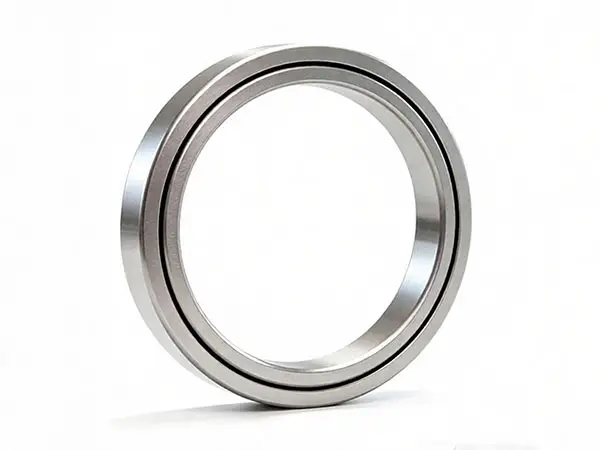
A Practical Crossed Roller Bearing Selection Checklist
Before sending an inquiry to a bearing manufacturer, prepare the following information:
Application: Explain what machine or mechanism will use the bearing.
Rotation: Specify which ring rotates and describe the motion.
Load: Provide radial, axial, and moment loads.
Speed: Provide normal and maximum operating speed.
Life: State the required service life or duty cycle.
Dimensions: Provide the available installation space and preferred dimensions.
Accuracy: Define runout, positioning, or repeatability requirements.
Rigidity: Explain the required stiffness or backlash condition.
Preload: Specify the required preload or clearance if known.
Environment: Describe temperature, dust, moisture, vacuum, or clean-room conditions.
Lubrication: State the lubricant and maintenance requirements.
Quality: Specify inspection reports, certificates, traceability, or other documentation.
Customization: Explain any special mounting, sealing, material, or structural requirements.
When some technical data is unavailable, you should provide the machine drawing, existing bearing model, photographs, sample, or application description instead. An experienced manufacturer can then review the available information and identify which parameters still require confirmation.
Final Thoughts: How to Select Crossed Roller Bearings Correctly
The best way to select a crossed roller bearing is to treat the bearing as part of the entire mechanical system rather than as an isolated catalog component.
Start with the application. Then calculate the combined loads, check service life, confirm the installation envelope, define accuracy and rigidity requirements, select an appropriate preload or clearance, evaluate speed and environmental conditions, and finally verify mounting and lubrication requirements.
This systematic approach reduces the risk of selecting a bearing that fits dimensionally but fails to deliver the required machine performance.
For manufacturers and engineers working on robotic joints, precision rotary tables, automation equipment, inspection systems, indexing mechanisms, and other high-precision machinery, providing complete application information to the bearing supplier is one of the most effective ways to reach the correct specification faster.
A reliable crossed roller bearing selection should ultimately be supported by technical drawings, load calculations, manufacturer data, and application-specific verification. When these elements are considered together, engineers can make a more confident decision on bearing size, accuracy, preload, configuration, and customization requirements.