
The main functions of lubrication are as follows:
- Reduce friction and wear. At the contact points between the rings, rolling elements and cage of the bearing, lubrication prevents direct metal-to-metal contact, thereby reducing friction and wear.
- Extend fatigue life. The rolling fatigue life of a bearing is extended when the rolling contact surfaces are well lubricated during rotation. Conversely, if the oil viscosity is too low and a proper oil film cannot be maintained, the fatigue life is shortened.
- Remove friction heat and provide cooling. Methods such as circulating oil lubrication use the oil to carry away heat generated by friction or transferred from outside, providing a cooling effect. This prevents the bearing from overheating and prevents premature aging of the lubricant itself.
- Other functions. Lubrication also helps prevent foreign matter from entering the interior of the bearing, and provides protection against rust and corrosion.
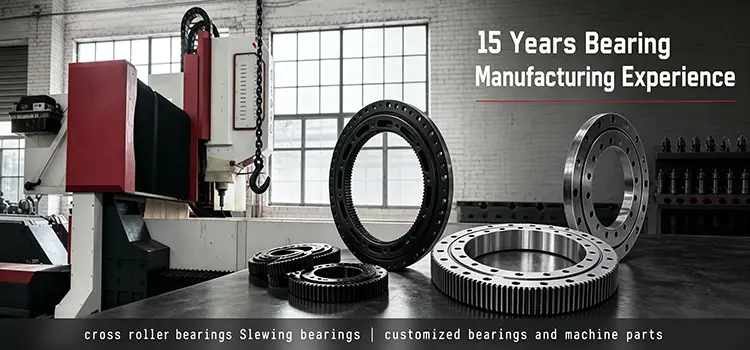
The lubrication methods for slewing bearings are divided into grease lubrication and oil lubrication. In order for the bearing to perform at its best, the lubrication method should first be selected according to the operating conditions and the intended application. If lubrication performance alone is considered, oil lubrication has the advantage. However, grease lubrication has the special advantage of simplifying the structure around the bearing. The advantages and disadvantages of grease lubrication and oil lubrication are compared below.