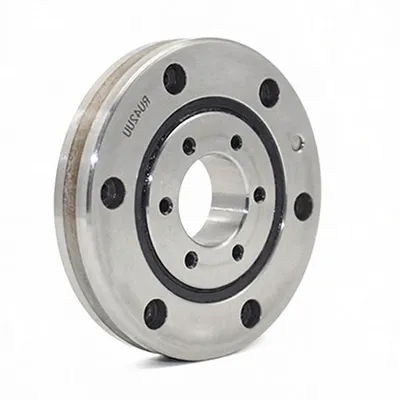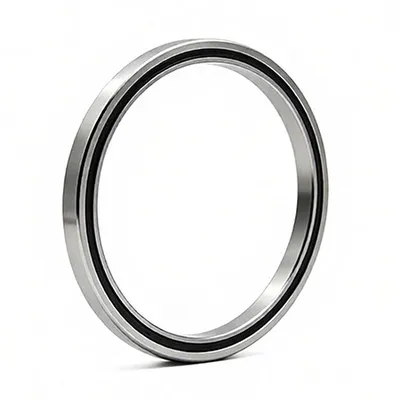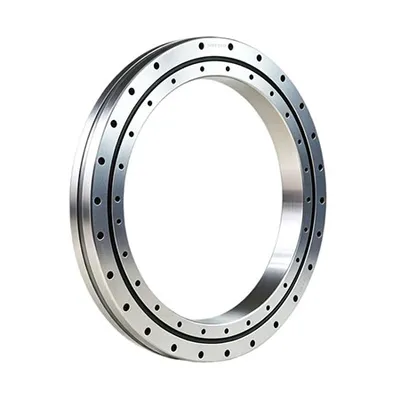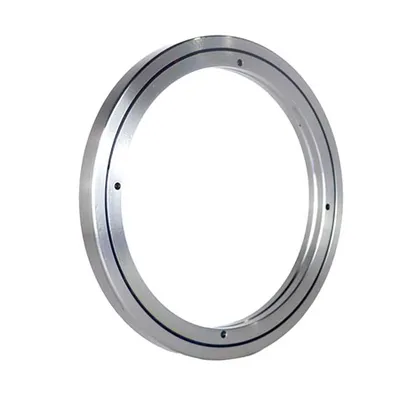
Cross roller bearings are widely used in precision machinery because their crossed cylindrical rollers can support radial loads, axial loads in both directions, and tilting moment loads within a compact bearing arrangement. Their high rigidity and rotational accuracy make them suitable for applications such as robotics, machine tools, semiconductor equipment, measuring instruments, optical systems, and other motion-control equipment. However, the same precision that makes a cross roller bearing valuable also means that maintenance cannot be treated like routine maintenance for a conventional bearing.
A practical cross roller bearing maintenance program should focus on lubrication, contamination control, mounting condition, preload, operating temperature, running torque, and early signs of damage. Proper maintenance can help preserve accuracy, reduce unexpected downtime, and extend the useful service life of the bearing.
Why Cross Roller Bearing Maintenance Matters
A cross roller bearing contains cylindrical rollers arranged alternately at approximately 90-degree orientations. This arrangement allows the bearing to handle loads from different directions while maintaining high rigidity. Manufacturers also offer bearings with different clearance or preload conditions to meet specific requirements for stiffness, rotational accuracy, and torque.
Because the internal structure has limited space and the rollers operate under concentrated rolling contact, insufficient lubrication can increase friction and accelerate wear. Foreign particles can also damage the raceway or rolling elements. THK, for example, recommends regular lubrication and warns that contamination, insufficient mounting rigidity, and inaccurate mounting surfaces can significantly affect bearing performance.
For this reason, maintenance should begin before a bearing develops obvious noise, vibration, or excessive rotational resistance.
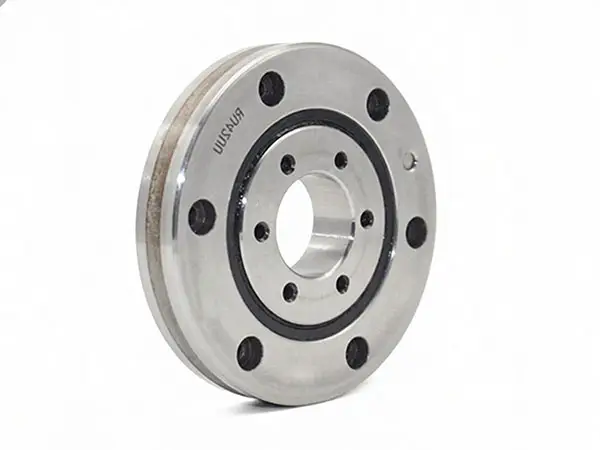
1. Check the Bearing Before and During Operation
Operators should establish a simple inspection routine based on the actual operating environment. A visual inspection can identify grease leakage, contamination, corrosion, loose mounting hardware, and abnormal marks around the bearing and adjacent components.
The maintenance team should also monitor several operating conditions:
- The bearing should rotate smoothly without abnormal sticking or roughness.
- The machine should not develop unusual vibration or operating noise.
- The housing and bearing area should not show unexplained temperature increases.
- The machine should not experience a sudden increase in starting or running torque.
- The mounting bolts should remain secure and should not show signs of loosening.
- The bearing should remain protected from dust, metal chips, coolant, moisture, and other contaminants.
A gradual change in running behavior can provide useful early evidence of lubrication problems, mounting distortion, overload, or internal damage.
2. Use the Correct Lubricant and Lubrication Method
Lubrication represents one of the most important parts of cross roller bearing maintenance. Many crossed roller bearings are supplied with grease and can be operated directly after proper installation, but regular replenishment may still be necessary depending on the bearing design and operating conditions. HIWIN specifies periodic grease replenishment for open crossed roller bearings, while THK recommends regular lubrication and states that the final interval should be determined according to actual machine conditions.
A common reference interval is approximately **every 3 to 6 months**, but users should not treat this period as a universal rule. Speed, load, operating temperature, oscillation, duty cycle, contamination, and machine environment can change the required lubrication frequency. Some bearing manufacturers specify different intervals for particular designs.
The maintenance team should follow these practices:
- The team should confirm the recommended grease or oil type before replenishing lubricant.
- The team should clean the lubrication area before opening a grease port.
- The team should avoid introducing dust or foreign particles during lubrication.
- The team should distribute lubricant throughout the internal rolling contact area rather than concentrating an excessive amount in one location.
- The team should never mix incompatible lubricants, because different additives or thickener systems can interact adversely.
After fresh grease is added, the bearing may temporarily exhibit higher rotational torque because the grease creates additional resistance. The torque normally decreases after excess grease becomes distributed or displaced during initial operation.
3. Keep Contamination Under Control
Contamination is one of the most preventable causes of premature bearing damage. Dust, machining chips, abrasive particles, moisture, and cleaning chemicals can enter the bearing area and interfere with the rolling contact between the rollers and raceways.
The maintenance team should therefore inspect seals, protective covers, lubrication ports, and surrounding machine structures. If the application generates large amounts of dust or chips, the machine designer should provide appropriate protection rather than relying on frequent cleaning alone.
When contamination has already entered the bearing, simply adding more grease may not solve the problem. The technician should determine whether the foreign material has damaged the raceway or rollers and should follow the bearing manufacturer's cleaning and inspection procedure.
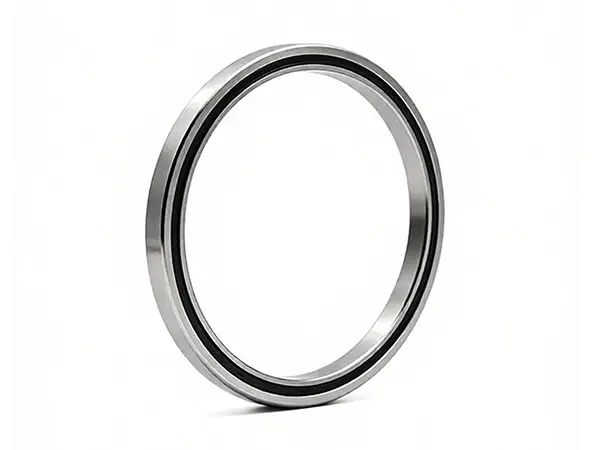
4. Pay Close Attention to Preload and Mounting Accuracy
Preload has a direct relationship with the performance of a precision cross roller bearing. Appropriate preload can improve rigidity and reduce unwanted internal movement, while excessive preload can increase friction, heat generation, and wear. Manufacturers therefore specify preload or clearance conditions for different bearing configurations.
Maintenance personnel should not attempt to adjust preload randomly when abnormal torque or temperature occurs. The problem may come from mounting distortion, housing accuracy, shaft fit, bolt tightening, or an incorrect installation sequence.
Schaeffler's installation guidance recommends tightening fixing screws progressively in a crosswise sequence and rotating the bearing ring during tightening to reduce distortion. The same guidance also explains that preload should be set through the specified adjustment method without exceeding the manufacturer's permitted tightening values.
The maintenance team should therefore record the original bearing specification, mounting method, preload condition, and relevant torque values whenever possible.
5. Inspect the Mounting Structure
A high-quality bearing cannot compensate for an inaccurate housing or insufficiently rigid mounting structure. If the mounting surface is uneven or the housing lacks sufficient rigidity, the bearing load may become concentrated in localized areas. THK specifically notes that insufficient rigidity or accuracy of mounting members can significantly reduce bearing performance.
During maintenance, technicians should inspect the bearing seat, shaft or mounting surface, flange, fixing bolts, and surrounding structure. The technician should also check whether the bearing has shifted from its original position.
If a bearing develops abnormal resistance shortly after replacement, the maintenance team should investigate the installation condition before assuming that the bearing itself is defective.
6. Monitor Temperature, Noise, and Torque Changes
Cross roller bearing maintenance becomes more effective when technicians compare current operating behavior with an established baseline.
A sudden temperature increase may indicate insufficient lubrication, excessive preload, overload, contamination, or abnormal friction. A change in running noise may indicate raceway or roller damage. An increase in rotational torque may result from lubricant deterioration, excessive grease, mounting distortion, preload changes, or internal damage.
The maintenance team should record operating temperature, speed, load conditions, lubrication history, and observed symptoms. This information makes it easier to identify gradual deterioration rather than waiting until the bearing fails.
7. Do Not Disassemble a Precision Bearing Without a Clear Reason
Cross roller bearings contain precision rolling elements and carefully controlled internal geometry. Some designs also use split rings, spacers, or retaining components that require correct assembly.
Manufacturers warn against unnecessary disassembly. HIWIN, for example, advises users not to remove or apply force to certain bolts and nuts on split bearing structures.
If maintenance inspection indicates serious internal damage, replacement or professional evaluation is generally safer than repeatedly disassembling and reassembling the bearing without the correct equipment and procedure.
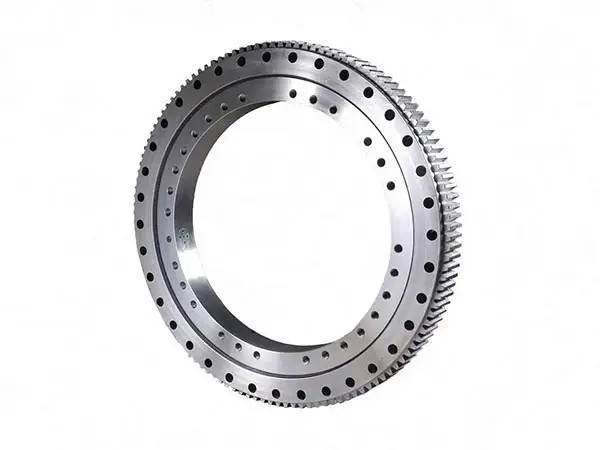
Common Cross Roller Bearing Maintenance Problems
Several maintenance symptoms appear repeatedly in precision motion systems.
Abnormal noise: The maintenance team should first check lubrication, contamination, mounting accuracy, and possible raceway damage.
Increasing rotational torque: The technician should check lubricant condition, grease quantity, preload, mounting distortion, and operating temperature.
Excessive heat: The technician should investigate excessive preload, insufficient lubrication, unsuitable lubricant, excessive speed, or abnormal load.
Short service life: The maintenance team should review contamination, load conditions, installation accuracy, lubrication intervals, and whether the selected bearing matches the actual application.
Loss of running accuracy: The technician should check mounting rigidity, preload condition, raceway damage, cage or roller condition, and the accuracy of adjacent components.
A Practical Maintenance Schedule
A useful maintenance program can divide inspection into three levels.
Daily or routine inspection: Operators should check unusual noise, vibration, temperature, grease leakage, and changes in machine movement.
Periodic inspection: Maintenance personnel should inspect lubrication condition, mounting bolts, protective structures, contamination, and operating torque according to the machine's service schedule.
Major inspection: When the machine reaches its planned maintenance interval or shows persistent abnormal behavior, technicians should perform a deeper evaluation of the bearing, mounting interfaces, lubrication system, and operating history.
The final maintenance interval should always reflect the actual application rather than relying on a fixed calendar period alone.
How to Extend Cross Roller Bearing Service Life
The most effective maintenance strategy combines several measures rather than focusing only on lubrication. The equipment designer should select the correct bearing size, clearance or preload, lubricant, sealing arrangement, and accuracy class for the application. The installation team should maintain accurate mounting surfaces and use the specified tightening sequence. The maintenance team should then control contamination, replenish lubricant correctly, and monitor changes in temperature, torque, vibration, and noise.
For applications involving vacuum, clean rooms, high vibration, high or low temperatures, or other special environments, standard lubrication and maintenance practices may not be appropriate. Manufacturers recommend selecting lubricants and configurations specifically suited to those conditions.
Final Thoughts
Effective cross roller bearing maintenance is not simply a matter of adding grease at regular intervals. Precision bearings require a coordinated approach that considers lubrication, contamination, preload, mounting accuracy, operating conditions, and early fault detection.
When maintenance personnel establish a clear inspection routine and keep accurate records of lubrication, temperature, torque, vibration, and service history, they can identify potential problems before they develop into costly equipment failures. For demanding precision applications, working with a qualified bearing manufacturer can also help users confirm the appropriate bearing design, preload, lubricant, and maintenance requirements for the actual operating environment.